Wednesday, December 12, 2012

Sunday, December 2, 2012
Capote's Lexicon
Since I started reading In Cold Blood I haven't been able to ignore that my vocabulary skills are way beneath an author's such a Truman Capote's. There are many books, especially the type I've read as a kid, in which few words that I don't know appear and when they do, they play an unimportant role in the sentence so you can just read over them or get their meaning from the context. It's worked so far for me to look up occasionally a word in my laptop's or kindle's dictionary for the sake of curiosity, but for this book I've had to actually learn the meaning of words I didn't know for me to get some sort of understanding of Capote's work. As I'm still reading the beginning of the book, a lot of what Capote writes is characterization or description of the characters and the setting, building up the scene for the awaited homicide to happen. Unlike a news report or journalistic writing, the book, composed by feature articles, shows the events in a juicer way. Nancy isn't just a straight-A student or a cat-loving loser, she's a girl who values her gold watch under her cat and her going-steady ring. She helps her acquaintances learn baking or organize school activities. Then there's Kenyon, who more than just a woodworker liked to go spend time alone in the basement. Capote's way of writing (his syntax, tone and register) makes the scenes he shows deeper in meaning and simply more vivid. So far in the book as much has happened to write a paragraph for a typical journalistic report on the crime, but the author goes beyond the simple facts that would make the subjects stereotypes and depicts them as real people the reader wants to understand. A diverse diction and specific words that portray the situation make In Cold Blood a more critical way of showing what happened in Holocomb, Kansas.
By reading random sentences throughout the book, I realized that the writing style and understanding it is essential for apprehension of the book. For example, this sentence would have no meaning for me had I not looked up the definition of many words: "An itinerant buffalo hunter, Mr. C. J. (Buffalo) Jones, had much to do with its subsequent expansion from a collection of huts and hitching posts into an opulent ranching center with razzle-dazzle saloons, an opera house, and the plushiest hotel anywhere between Kansas City and Denver" (pg. 32). If reading it quickly, I would have gotten that the town grew and became sort of a sophisticated place with an opera. While I wouldn't have been wrong, I would've missed out on a lot of the essence of the sentence. The town grew from a Midwest settlement that started out from travelers who lived in huts and traded what they hunted. It became an extravagant southern village, I assume that with a New Orleans style, and now, it's a place where two criminals pass by and barely notice it. Olathe is not the subject of the book but Capote's description of it shows how communicative writing gets to the reader. Other "simpler" sentences are as well expressive because of Capote's techniques. Capote writes, "Herb was hard-headed, a slow man to make a deal; Johnson had worked over a year to clinch this sale" (pg. 47). As he juxtaposes the characters, Capote describes the situation, rather than just saying, "Johnson had worked hard to make this deal with Mr. Clutter." As most books do, In Cold Blood begins with describing the setting and the characters that will matter in the rest of the book, and the way Capote does it gives a deeper understanding of what is happening. Aspects like word choice or syntax give what would seem like simple sentences an implied meaning.
These are the words I had to look up in the last fifteen pages I read (between pages 30 to 45 approximately):
Opulent: luxurious, lavish.

Hitching: traveling by hitchhiking or moving from one place to another.

Plushiest: like a plush, soft to the touch.

Razzle-dazzle: dazzling excitement, extravagant or showy display.


Haranguing: agressive and lengthy speech.

Spittoons: metal pot.

Conscientious: wishing to do what is right, diligent.

Tenant: someone who rented from a landlord.

Bashful: shy, reserved.

Jolt: push or shake abruptly.

Rankle: to annoy or cause resentment.

Hosiery: stockings, socks.

Quandary: a state of perplexity, of being confused in a difficult situation.

Chintz: multicolored fabric.

Decrepit: an elderly and weak or worn out.

Dourness: relentless, gloomy in appearance.

Hefty: large, heavy and powerful.


Lanky: thin and tall.

Reticent: revealing one's thoughts and feelings.

Keen: enthusiastic or eager to do something.

Disheveled: appearing dirty and disordered.

Foal: a young animal.

Astride: with a leg on each side of.

Prim: formal and respectable, proper.

Loiter: to wait around, linger.

Clinch: to settle or confirm something, like a contract.

By reading random sentences throughout the book, I realized that the writing style and understanding it is essential for apprehension of the book. For example, this sentence would have no meaning for me had I not looked up the definition of many words: "An itinerant buffalo hunter, Mr. C. J. (Buffalo) Jones, had much to do with its subsequent expansion from a collection of huts and hitching posts into an opulent ranching center with razzle-dazzle saloons, an opera house, and the plushiest hotel anywhere between Kansas City and Denver" (pg. 32). If reading it quickly, I would have gotten that the town grew and became sort of a sophisticated place with an opera. While I wouldn't have been wrong, I would've missed out on a lot of the essence of the sentence. The town grew from a Midwest settlement that started out from travelers who lived in huts and traded what they hunted. It became an extravagant southern village, I assume that with a New Orleans style, and now, it's a place where two criminals pass by and barely notice it. Olathe is not the subject of the book but Capote's description of it shows how communicative writing gets to the reader. Other "simpler" sentences are as well expressive because of Capote's techniques. Capote writes, "Herb was hard-headed, a slow man to make a deal; Johnson had worked over a year to clinch this sale" (pg. 47). As he juxtaposes the characters, Capote describes the situation, rather than just saying, "Johnson had worked hard to make this deal with Mr. Clutter." As most books do, In Cold Blood begins with describing the setting and the characters that will matter in the rest of the book, and the way Capote does it gives a deeper understanding of what is happening. Aspects like word choice or syntax give what would seem like simple sentences an implied meaning.
These are the words I had to look up in the last fifteen pages I read (between pages 30 to 45 approximately):
Opulent: luxurious, lavish.
Hitching: traveling by hitchhiking or moving from one place to another.
Plushiest: like a plush, soft to the touch.
Razzle-dazzle: dazzling excitement, extravagant or showy display.
Haranguing: agressive and lengthy speech.
Spittoons: metal pot.
Conscientious: wishing to do what is right, diligent.
Tenant: someone who rented from a landlord.
Bashful: shy, reserved.
Jolt: push or shake abruptly.
Rankle: to annoy or cause resentment.
Hosiery: stockings, socks.
Quandary: a state of perplexity, of being confused in a difficult situation.
Chintz: multicolored fabric.
Decrepit: an elderly and weak or worn out.
Dourness: relentless, gloomy in appearance.
Hefty: large, heavy and powerful.
Lanky: thin and tall.
Reticent: revealing one's thoughts and feelings.
Keen: enthusiastic or eager to do something.
Disheveled: appearing dirty and disordered.
Foal: a young animal.
Astride: with a leg on each side of.
Prim: formal and respectable, proper.
Loiter: to wait around, linger.
Clinch: to settle or confirm something, like a contract.
Saturday, December 1, 2012
Alternating Stories
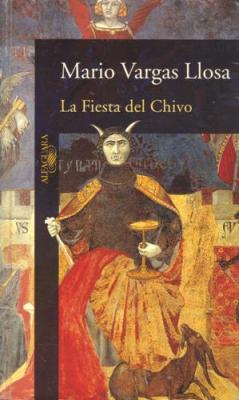
As I read In Cold Blood I could relate Truman Capote's way of telling the story to Vargas Llosa's way of writing La Fiesta del Chivo (The Feast of the Goat). Capote begins his book with a description of the town and characterizing a couple of characters whose lives, I assume, will become related to each other. After introducing Mr Clutter, the author shifts to an in medias res, a I learned in Spanish class, scene in a restaurant, where Perry is waiting for Dick, two characters that as the chapter continues you learn that they are some type of adventurers, even though Dick is cautious. In Mr Clutter's chapter, he finds a group of pheasant hunters, so once I read that Dick and Perry had a hunting shotgun in their car, I predicted that the stories will interweave into the story of the murder in Holocomb. As Perry sits in the café waiting for Dick, the narrator begins describing the situation as he or she deepens into Perry's life in a subtle way to characterize him. Then the author switches back to the Clutter family but describes Nancy instead of her father. Then back to Perry, now with Dick, and then back to Nancy. It seems like Capote will alternate stories between several characters as he builds up the scene of the empty and isolated town that will be hit with the death of six people, perhaps Mr and Mrs Clutter and their four children).
The Feast of the Goat begins with Urania's return to Dominican Republic after having left for several decades. The narrator hints that some sort of traumatic experience shocked her and made her hate her family and her country, and just like Capote, introduces a mystery that the reader will discover throughout the book. Vargas Llosa has three alternating narrations, one from Urania's point of view, one that shifts between the killers of Trujillo and another one for the dictator himself. As he characterizes each of the supposedly real characters, the reader begins to discover what had happened to Urania and the specific events that led to the assassination and her rape. Although The Feast of the Goat and In Cold Blood have very different tones and environments, the structure the authors use is similar. The first has an intrigued tone while the second has a detached one. Both authors are trying to explain a series of events and what they meant in a larger scale. Vargas Llosa explains the nature of dictatorship, machismo and corruption as he shows why Latin America works that way politically. Capote, as we've talked about in class, will show how small places like Holocomb are being affected by the growth of towns and the difficulty of being isolated nowadays. From what I've read so far, using alternating narrations helps give a better insight into what is happening and deal with different themes. Authors use it to get to what they're trying to say in an implicit way.

Vocabulary:
The Feast of the Goat begins with Urania's return to Dominican Republic after having left for several decades. The narrator hints that some sort of traumatic experience shocked her and made her hate her family and her country, and just like Capote, introduces a mystery that the reader will discover throughout the book. Vargas Llosa has three alternating narrations, one from Urania's point of view, one that shifts between the killers of Trujillo and another one for the dictator himself. As he characterizes each of the supposedly real characters, the reader begins to discover what had happened to Urania and the specific events that led to the assassination and her rape. Although The Feast of the Goat and In Cold Blood have very different tones and environments, the structure the authors use is similar. The first has an intrigued tone while the second has a detached one. Both authors are trying to explain a series of events and what they meant in a larger scale. Vargas Llosa explains the nature of dictatorship, machismo and corruption as he shows why Latin America works that way politically. Capote, as we've talked about in class, will show how small places like Holocomb are being affected by the growth of towns and the difficulty of being isolated nowadays. From what I've read so far, using alternating narrations helps give a better insight into what is happening and deal with different themes. Authors use it to get to what they're trying to say in an implicit way.
Vocabulary:
- Honed: made sharper, more efficient.
- Ludicrous: very foolish, ridiculous.
- Reticent: not revealing one's feelings, reserved.
- Brooding: very unhappy.
- Gewgaw: a showing things that is useless.
- Uppity: arrogant.
- Ominous: threatening, giving the impression that something bad is happening.
- Impish: inclined to do something bad, mischievous.
- Pragmatic: dealing with things practically.
- Ineffable: too great or too extreme to be expressed in words.
- Cinch: easy task or part of a saddle.
- Elocution: pronunciation, articulation.
- Lattice: grid of fibers.
- Despondency: low spirits, hopelessness.
- Sprucing: neat in appearance.
Subscribe to:
Posts (Atom)